
The ingredients of Balance, Exercise, Nutrition and Rest for Longevity
In my last Healthy Living newsletter I introduced the concept of longevity and what it takes to help yourself live a healthier later life. The image below may refresh your memory.
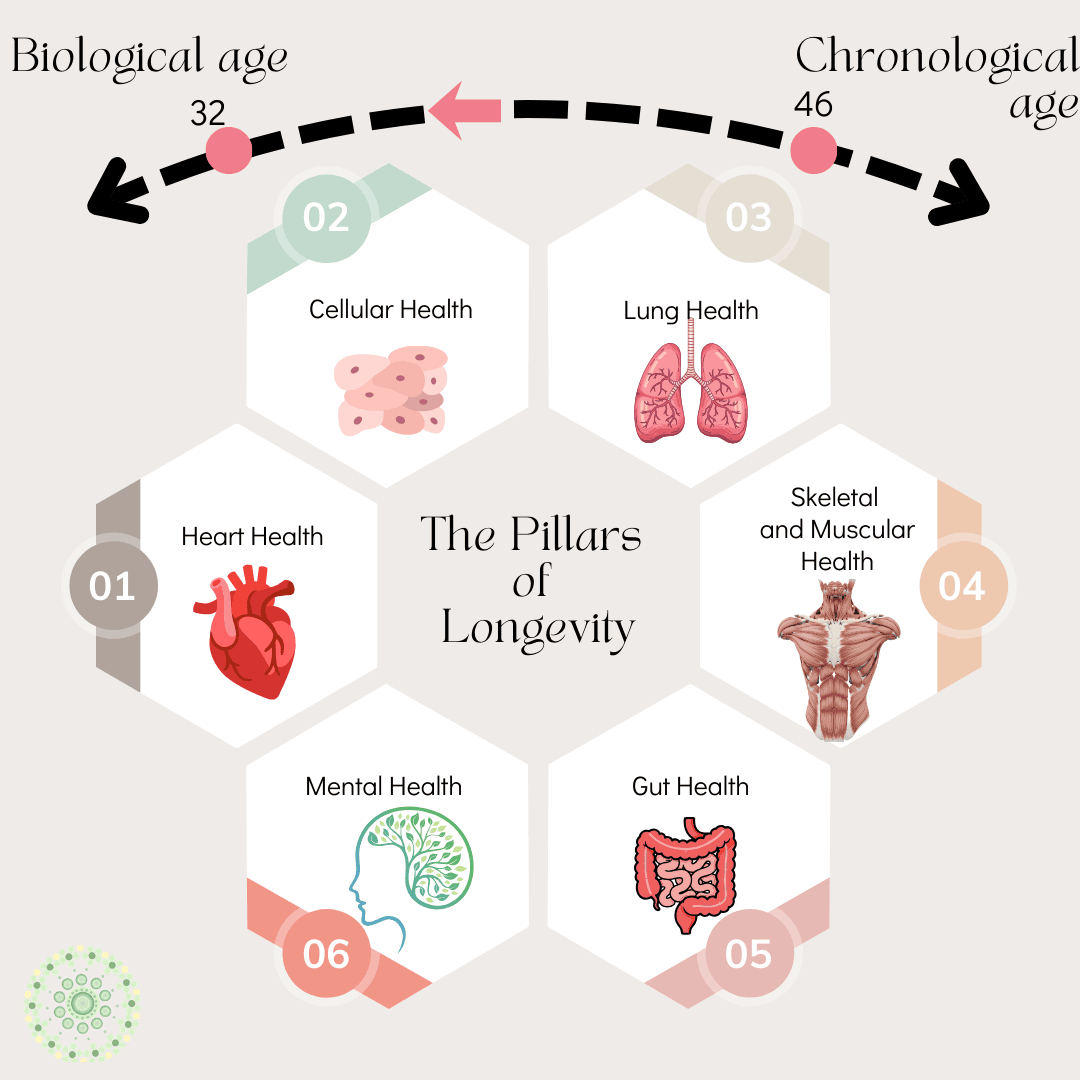
This newsletter will help you understand how exercise, nutrition and adequate rest helps the body feel like it is working at its best capacity. Understanding why we put certain actions into place can help us better understand why our gradual tweaks we make in self care can have long lasting helpful impacts on our day to day lives.
Heart Health - 🫀
Interval and Endurance training: Interval and endurance training are heart health's most potent positive benefactors. They positively affect all areas of the cardiovascular system, including the heart and blood, arteries, and veins. Pilates is great for endurance, we employ endurance techniques often in your sessions. Intervals can (and are for some) also be added when appropriate and are a great addition to your program.
Specifically, they:
- Strengthen the heart muscle
- Prevent arterial clogging
- Improve hemoglobin content in the blood
Micronutrient balance: A diet that prioritizes the consumption of a range of heart-healthy nutrients, including magnesium, potassium, B vitamins, vitamin D, and selenium, through the consumption of a variety of fruits and vegetables at every meal can lower the risk of coronary heart disease, stroke, and the overall incidence of cardiovascular diseases. Nuts and seeds are also important heart health foods and should be consumed daily.
Macronutrient balance: Macronutrient balance has been linked to cardiovascular disease and related risk factors (high LDL and low HDL cholesterol). Specifically, increasing the consumption of monounsaturated fat (olive oil), omega-3 polyunsaturated fatty acids (fatty fish, chia, hemp seeds), and good-quality carbohydrates (whole grains, fruits, vegetables) while decreasing the amount of saturated fat (full-fat dairy products, animal-based foods) and refined grains (sweets, white carbs) can reduce the risk of cardiovascular disease.
Adequate sleep: A healthy sleep schedule is essential for preserving cardiovascular health. During sleep, blood pressure is reduced, and consequently, lack of sleep inevitably means that your blood pressure will remain higher for longer during the day. Elevated blood pressure is the most prominent risk factor for developing life-threatening heart conditions.
Cellular Health - 🧬
Resistance training: Resistance training elevates your metabolism and prevents it from slowing down. This is of paramount importance as the metabolic slowdown is proven to be the most potent contributor to weight gain. This means we need to lift things we find heavy and gradually increase this weight over time. Pilates is resistance training, adding in other weights to your session also adds resistance in different ways.
Interval training: Interval training increases growth hormone levels, which are essential for burning fat and maintaining and maintaining muscle mass. Switching between tempo and resistance intensity in your session is a great way to practice intervals in Pilates.
Endurance training: Interval training increases growth hormone levels, which are essential for burning fat and maintaining muscle mass. Those times where we have you on the apparatus for a number of sets, where your muscles are burning and they can begin to shake, these bouts are helping you increase your endurance.
Micronutrient balance: Micronutrients have a central role in human metabolism. They are required for the appropriate functioning of energy production in the cells through the metabolism of carbohydrates, proteins, and fats. A shortfall in any of them will be rate-limiting for energy production, with potential metabolic complications.
Macronutrient balance: Macronutrients are the nutritional components of food that the human body needs in large amounts for energy production (metabolism) and the maintenance of physiological functions. They include carbohydrates, fat, and protein. The diet macronutrient ratio doesn't directly influence weight. To optimally manage your weight, find a ratio you can stick with, whether it is a low-fat diet or a low-carb diet, etc., focus on healthy food choices across all food groups, and eat fewer calories than you burn (if you are looking to lose weight). If you are looking to add muscle then you will need to consume at least the amount of calories you burn, however ideally a caloric surplus in needed for muscle growth.
Adequate sleep: Maintaining a consistent sleep schedule with sufficient sleep time is vital for maintaining normal hormonal function, which is important for hunger regulation and prevention of stress eating. It is also critical for recovering effectively leading to maintaining muscle mass and high metabolism.
Lung Health - 🫁
Interval and Endurance training: Interval and endurance training are the most potent positive factors of lung health. They positively affect all areas of the respiratory system, including the lungs and respiratory muscles. Specifically, they:
- Strengthen the respiratory muscles
- Improve oxygen transfer efficiency in the alveoli
- Increase vital lung capacity
Breathwork is also a great way to improve lung function. However, it adds function in a different way and is a great addition to Interval and Endurance training.
Micronutrient balance: Certain micronutrients have anti-inflammatory and anti-oxidative properties, which can directly target the pathogenesis of lung function decline, such as chronic obstructive pulmonary disease, and thus promote lung health. These are vitamin A, vitamin E, vitamin C, and selenium.
Macronutrient balance: Carbohydrate metabolism acutely increases CO2 production and may deteriorate lung function in the long term, especially in the elderly. Indeed, a carbohydrate-rich diet has been negatively associated with health markers of lung function, such as the FEV1, whereas protein and fat intake are inversely associated with lung function decline. This relationship is more powerful when carbohydrates derive from food sources rich in refined carbohydrates (sweets, refined grains) with low dietary fiber content.
Adequate sleep: Sleep deprivation has been shown to elicit the loss of breathing control, a risk factor for developing respiratory disorders such as asthma and COPD.
Skeletal Health - 🦴
Resistance training:
Resistance training places mechanical stress on bones, stimulating them to become denser, stronger, and more resilient to fractures. It directly counters age-related bone loss by triggering bone-building cells, particularly targeting high-risk areas like the hip, spine, and wrists.
Key benefits of resistance training for bone health include:
- Increased Bone Density
- Targeted Strengthening
- Improved Muscle Strength & Support
- Reduced Fall Risk
- Slows Bone Loss
Interval training:
Interval training improves skeletal health by
subjecting bones to high-impact, weight-bearing, and variable mechanical forces that stimulate bone remodeling and increase density. The alternating high-intensity intervals boost bone mineral density more effectively than steady-state, lower-intensity exercise by forcing bone adaptation.
- Boosts Bone Density
- Combines Muscle & Impact
- Enhances Remodeling
- Increases Strength & Balance
- Efficient Bone Loading
Endurance training:
Endurance training improves skeletal health by subjecting bones to repetitive, moderate-impact loads (like running or jogging) that stimulate bone-forming cells, increasing bone mineral density (BMD) and strengthening structural architecture. It promotes positive bone turnover, reduces the risk of osteoporosis, and improves blood flow to the bone, enhancing nutrient supply.
Key benefits and mechanisms include:
- Increased Bone Density (BMD)
- Structural Adaptations
- Hormonal Response
- Improved Vascularisation
- Reduced Bone Lost
It is important to note that while running provides significant bone benefits, non-impact endurance sports like cycling or swimming offer fewer bone-density benefits, and excessive training without proper nutrition can sometimes lead to decreased bone density.
Micronutrient balance:
Micronutrient balance is essential for skeletal health
because bone is a living tissue, not just a static structure, that requires a precise, synergistic combination of vitamins and minerals to constantly remodel, repair, and maintain its density and strength. When these nutrients are balanced, they work together to ensure maximum calcium absorption, proper collagen formation, and controlled bone turnover, preventing conditions like osteoporosis, rickets, and osteomalacia.
Here is why a balanced intake of micronutrients is vital for skeletal health:
- Synergistic Calcium Management
- Optimal Bone Mineralization
- Bone Matrix Formation (Collagen)
- Regulating Bone Remodeling
Preventing Age-Related Loss
Key Micronutrients for Bone Health
A balanced diet, rather than isolated supplementation, is the best approach to ensuring these nutrients work together effectively:
- Calcium
- Vitamin D
- Magnesium
- Vitamin K2
- Vitamin C
- Potassium
Zinc & Copper
Macronutrient balance:
A balanced intake of macronutrients—protein, fat, and carbohydrates—is critical for skeletal health because it supports the structural, hormonal, and metabolic processes needed to build, maintain, and repair bone tissue. Bone is living, remodeling tissue, and a balanced diet ensures that bone formation (anabolism) keeps pace with bone resorption (breakdown).
Here is why a balanced macronutrient approach is good for skeletal health:
1. Protein: Structural Integrity and Muscle Support
- Bone Matrix Structure
- IGF-1 Regulation
- Calcium Absorption
Muscle-Bone Synergy
2. Carbohydrates: Energy and Mineral Bioavailability
- Energy for Metabolism
- Calcium Bioavailability
Avoiding Refined Sugars
3. Fats: Vitamin Absorption and Inflammation Control
- Fat-Soluble Vitamin Absorption
- Omega-3 Fatty Acid
Saturated Fat Caution
4. The Synergistic Effect of Balance
A balanced diet, often characterized by the Mediterranean-style diet (high in nutrients, fruits, vegetables, and lean protein), reduces bone turnover and increases BMD, while a "Western" diet (high in processed foods and refined sugar) is associated with lower bone health.
- Protein + Calcium
Acid-Base Balance
Adequate rest/sleep:
Adequate rest and sleep are essential for skeletal health because they are the primary times when the body actively repairs, remodels, and strengthens bone tissue. Bones are living tissues, and without sufficient sleep, the balance shifts from rebuilding to breakdown, increasing the risk of osteoporosis, lower bone mineral density, and fractures.
Here is why adequate rest and sleep are critical for your skeletal system:
1. Active Bone Remodeling and Repair
While you sleep, your body undergoes significant skeletal maintenance:
- Bone Remodeling Cycles
- Rebuilding Micro-Damage
- Healing Fractures
2. Hormonal Support for Bone Growth
Deep, restorative sleep triggers the release of hormones essential for bone metabolism:
- Growth Hormone (GH)
- Melatonin
- Regulating Cortisol
3. Prevention of Structural Weakness
- Higher Mineral Density
- Osteoporosis Risk
- Reduced Fracture Risk
4. Supporting Musculoskeletal Stability
Sleep doesn't just affect the bones directly; it supports the surrounding structures that keep the skeleton safe:
- Muscle Strength
- Spinal Support
Recommendation: For optimal bone health, it is generally recommended to get 7–9 hours of quality sleep per night.
Now that you have the information as to why these different actions are important for your health it may help you make some gradual tweaks in your regular routine so that over time you can help yourself safeguard your future with vitality and purpose.
The nutritional information in this article is based on scientific evidence but a blanket approach should not be taken by all people. Medications and conditions should always be taken into account. It is ALWAYS advisable to consult your Specialist, GP and a trained Dietition/Clinical Nutritionist when seeking to make changes to your diet.
When seeking to make changes to your exercise program please seek guidance from your movement specialist. Adding in workouts to your current program requires a gradual implementation of additional exercises and exercise types. Timing of exercise is also important as adequate rest in between exercise bouts is important to prevent over training and avoid injury.